A small kitchen can feel limited—but with the right layout and storage strategy, it can become one of the most functional (and stylish) spaces in your home. Whether you’re working with a compact apartment kitchen or a narrow cooking area, these ideas will help you make every centimeter count.
Choose a layout that fits your space
Most small kitchens work best with one of these layouts:
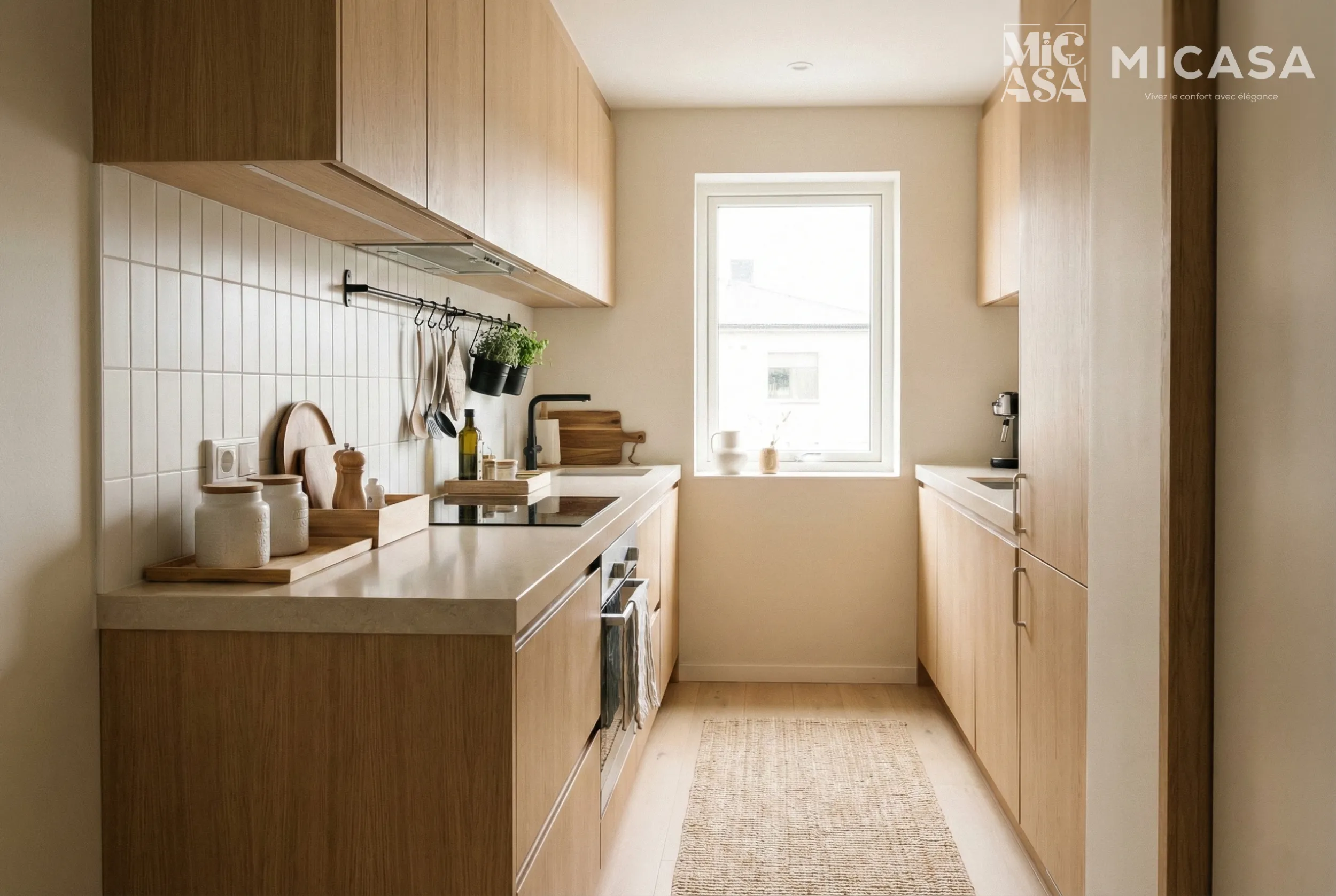
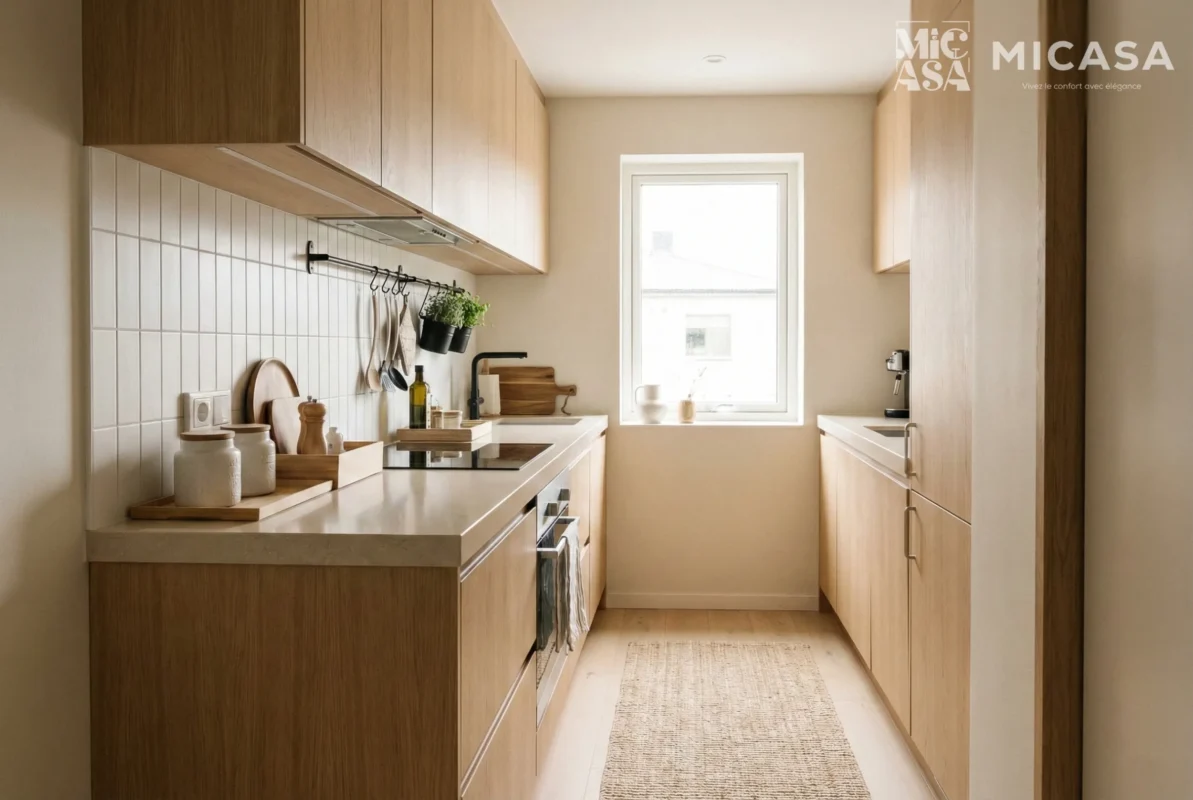
Galley kitchen (two parallel lines): Extremely efficient for cooking because everything stays within reach.
L-shape layout: Great for corners and open-plan homes. Keeps movement fluid.
Single-wall layout: Perfect for studios and tight spaces—works best with smart storage.
If your kitchen feels crowded, avoid adding unnecessary islands or large decorative items. Function first, always.
Go vertical: the most underrated space
The biggest mistake in small kitchens is ignoring wall space. Try:
Open shelves for everyday items (plates, cups, jars).
Hanging rails for utensils and cookware.
Magnetic strips for knives (if safe in your home).
Wall-mounted spice racks.
Vertical storage keeps surfaces clear—and clear surfaces make a kitchen feel bigger immediately.
Make cabinets work harder
Cabinets aren’t just “storage,” they’re your secret weapon:
Use drawer dividers for cutlery and tools.
Add pull-out baskets for deep cabinets.
Install stackable organizers for bowls and plates.
Store seasonal or rarely used items on higher shelves.
If your cabinets are messy, the kitchen will feel messy—no matter how modern it looks.
Lighting changes everything
Small kitchens need good light:
Use bright, warm ceiling lighting for general visibility.
Add under-cabinet lighting for countertops.
Choose reflective finishes (subtle gloss tiles, light countertops) to bounce light.
A small kitchen with good lighting can look more premium than a big kitchen with poor lighting.
Choose colors and materials that open the space
To make a small kitchen feel larger:
Prefer light wood, white, or warm neutral tones.
Use simple, clean cabinet fronts.
Avoid heavy patterns on large surfaces.
You can still add personality—just do it in small accents like handles, a vase, or a small wall print.
Keep counters “clean by design”
Clutter happens when there’s no “home” for things. Try:
A single tray for oils and daily essentials.
A small jar set for coffee/sugar/tea.
One organizer near the sink for soap and sponge.
The goal is to create a kitchen that stays tidy even on busy days.
Final takeaway
A small kitchen doesn’t need more space—it needs better planning. When layout is efficient, storage is vertical and intentional, and lighting is clean, your kitchen feels bigger, calmer, and easier to use.